A solar streetlight can shine brightly at installation, then grow dim after several cloudy nights. Owners often ask, “why do solar street lights stop working after a few months?” The answer is rarely one faulty panel alone. A tired battery, undersized storage, poor wiring, a misconfigured controller, or shade across the panel can each leave a lamp dark before dawn. Small installation details matter: a loose connector or a panel covered by dust can quietly reduce charging.
Published evidence helps separate likely causes from assumptions. In a 2013 review in Progress in Photovoltaics, NREL researchers Dirk Jordan and Sarah Kurtz reported, “The median value of the degradation rate is 0.5%/year.” That is a useful expert benchmark, not a streetlight failure rate. It suggests that sudden failures within months deserve checks of the battery, controller, wiring, and installation before blaming normal panel aging. Real systems still vary.
The distinction matters. A panel may test well at midday while a weak battery cannot carry the lamp through a long winter night. Battery chemistry, temperature, charge settings, and actual nightly operating hours all affect performance. The inspection should record battery voltage, controller status, panel cleanliness, and the hours of light after sunset. Not every diagnosis is obvious. Even experienced installers can miss intermittent faults that appear only after rain or several overcast days. This guide examines ten common failure causes and practical checks, while treating field conditions—not assumptions—as the evidence.
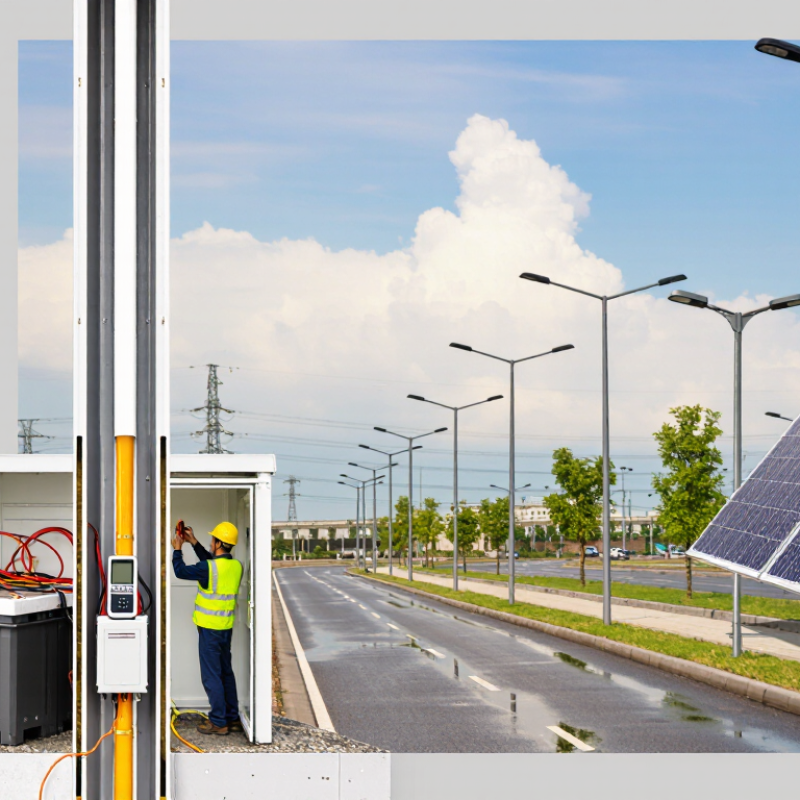
A solar street light is a small off-grid power system. Its panel converts sunlight into electricity, a controller manages charging, and a battery stores energy for after dark. The LED and optics then turn that stored power into usable road light. Every part depends on the others. A dusty panel, loose connector, or poorly sized battery can reduce nightly runtime. Small losses add up.
NREL’s 2013 review, Photovoltaic Degradation Rates—An Analytical Review, examined nearly 2,000 reported rates and found median module degradation of about 0.5% per year. That figure describes gradual panel decline, not sudden failures; shade, dirt, and wiring faults can cause sharper output losses. Battery performance also depends on operating temperature and charge control. A battery exposed to repeated deep discharge may lose useful capacity sooner than expected. The U.S. Department of Energy’s LED lifetime guidance distinguishes LED lumen-maintenance estimates from the service life of a complete luminaire. In other words, a long-lived LED does not guarantee a long-lived street light. Check panel output, battery capacity, controller settings, connections, and actual overnight illumination together. A tidy specification sheet can still miss what happens on a cloudy week.
Top 10 Reasons Solar Street Lights Fail So Soon?
Battery and Charge-Controller Problems That Shorten Service Life
A street light can look fine at dusk and still fail before midnight. Often, the battery is losing usable capacity long before it stops working completely. Repeated deep discharges, high heat inside the fixture, or a battery sized too small for cloudy weeks can speed that decline. A swollen case or unusually warm battery compartment deserves attention. So does a lamp that dims earlier each night.
The charge controller matters just as much. Incorrect settings may undercharge the battery or keep charging it when it is already full. Loose terminals and corroded connectors add resistance, wasting energy as heat. Small losses add up. In field checks, it helps to compare battery voltage at sunset and before dawn, then inspect connections with the system safely isolated. One reading is not a diagnosis; weather and recent sunlight affect the result. I have seen that detail overlooked.
Tips: Keep battery and controller specifications matched. Check charge settings against the battery type, clear dirt from the panel, and record nighttime operating hours. If performance drops, test the battery and controller separately before replacing parts. A simple log can reveal a pattern.
Solar street lights often fail early because their panels collect less energy than the system needs. A hairline crack, loose connector, or water-damaged cable can reduce charging before the damage looks serious.
Small cracks matter. Dust, bird droppings, and fallen leaves also block sunlight, especially after long dry spells. It is easy to blame the battery, but a weak charge can make a healthy battery seem faulty.
Placement is just as important as panel condition. A lamp installed beneath a tree may receive morning sun but sit in shade for the strongest midday hours. Nearby walls, roofs, and poles can cast seasonal shadows that were missed during installation.
Even partial shading can reduce output, depending on the panel design. Check the site across different times of day, not just during one sunny visit. Shade wins.
Insufficient sunlight becomes more noticeable in winter, during cloudy periods, or when the panel faces away from the strongest daily sun. Dirt can also build up unnoticed on a shallow or poorly positioned panel.
Inspect for cracks, loose mounts, corrosion, and cable damage; then clean the surface gently with water and a soft cloth. A qualified technician can measure panel output in full sun and compare it with its rated performance. Record the readings. One inspection is not always enough.
Solar street lights may dim or switch off while the LED chips still work. The U.S. Department of Energy’s LED luminaire lifetime guidance notes that drivers and heat can limit a fixture’s life. Dust-packed vents, a browned driver casing, or repeated night-time flicker are warning signs. IES LM-80 testing tracks LED light output for at least 6,000 hours, but it does not test a complete street-light system’s wiring or sensors. Small faults matter.
Wiring problems can mimic battery failure. A loose crimp, water inside a connector, or corrosion at a terminal may cause voltage drops and intermittent lighting. Check connections under load, not only by sight. NREL’s review of more than 2,000 photovoltaic degradation rates found a median decline of about 0.5% per year. That gradual change makes sudden outages worth investigating elsewhere, too. It is easy to blame the panel; that shortcut can waste a maintenance visit.
Sensors create another quiet failure path. A photocell pointed toward nearby lighting may read false daytime conditions, while a motion sensor aimed at moving branches can trigger erratically. Record switching times, inspect sensor alignment, and compare several nights of operation. One missed detail: settings can be wrong even when every component passes a basic test. Keep the checks simple, but repeat them after rain or servicing.
Solar street lights often fail early because small installation errors become daily stress. A panel shaded by a roof edge may lose useful charging hours, even on bright days. A pole tilted only slightly can also change the panel’s exposure. Check the sun path at different times, not just during installation. Small details matter.
Water is another quiet cause. Poorly sealed cable entries can let moisture reach connectors after repeated rain. In cold regions, snow may cover a low-mounted panel, while freeze-thaw cycles can loosen brackets. Strong wind can shake fasteners until they back out. Use mounting hardware suited to the pole and local conditions, and inspect seals after installation. A sturdy-looking setup is not always a sound one.
Maintenance is often treated as optional, which is a mistake. Dust, leaves, and bird droppings reduce panel output; clean the surface gently with water and a soft cloth. Check for corrosion, loose wires, cracked housings, and dimming lamps every few months. Battery aging is harder to judge from appearance alone, so compare nighttime runtime over several weeks. One missed inspection may not matter. Repeated neglect can. Even a careful schedule cannot prevent every failure, and I would not assume every short runtime points to the battery.
A panel converts sunlight into electricity. A controller manages charging, and a battery stores energy for nighttime use. LEDs and optics provide the road light.
The parts depend on each other. A dusty panel or loose connector can reduce charging. Small losses add up.
Panel output may decline gradually over time. Dirt, shade, or damaged wiring can cause a sharper drop. Those issues are easy to mistake for aging.
A panel that collects too little sunlight may not charge the battery fully. Check the panel and connections before replacing the battery. I might overlook this step, too.
A tree may shade the panel during strong midday sun. Check shadows at different times of day and across seasons. Shade wins.
Look for fine cracks, loose mounts, corrosion, and damaged cables. Dust, bird droppings, and fallen leaves can also block sunlight. Clean the surface gently.
No. LED brightness can remain useful while the battery, controller, or connections need attention. Check the full system.
A qualified technician can measure its output in full sun and compare it with its rating. Record readings over time. One visit may not tell the whole story.
Solar street lights depend on several components working together: the panel collects sunlight, the charge controller regulates power, the battery stores energy, and the LED provides illumination when needed. If one part is poorly matched, damaged, or incorrectly configured, the system may perform inconsistently. This helps explain why do solar street lights stop working after a few months: battery degradation, controller faults, loose connections, or a panel that receives too little direct sunlight can quickly reduce performance.
Early failures may also result from cracked panels, faulty LEDs, wiring problems, or sensors that do not switch the light on and off reliably. Poor installation can leave equipment exposed to water, heat, wind, or impact, while dust and debris can reduce the panel’s ability to recharge the battery. Regular checks, suitable component selection, secure installation, and cleaning can help identify problems before the light stops working and support a longer service life.

Lukas Lighting