Solar street lighting works only when panel output, battery storage, and nightly demand match local conditions. A bright lamp is not automatically reliable. Correct sizing begins with measured load data, not product labels alone. This guide explains how to calculate solar panel and battery size for street lights using practical engineering steps.
Start with the lamp’s wattage, operating hours, and control schedule. A 40-watt LED running for 12 hours consumes 480 watt-hours nightly. Add controller losses, wiring losses, and battery efficiency. Weather changes the result. A shaded panel, dusty surface, or cloudy period can reduce available energy. Local peak sun hours should come from a trusted solar database or site measurements. Professional installers also check winter conditions, ambient temperature, mounting direction, and maintenance access. Small errors matter.
Battery sizing requires a chosen autonomy period. Two or three cloudy nights may suit one location, but not another. Use usable depth of discharge, rather than full nameplate capacity. Lithium and lead-acid batteries behave differently under cold temperatures and high discharge rates. That detail is easy to miss. Panel capacity must replace daily consumption and recover the battery after poor weather. Real projects need safety margins, but excessive oversizing increases cost and material use. Record every assumption, test performance after installation, and revise estimates when actual night-time results differ. No formula replaces site evidence.
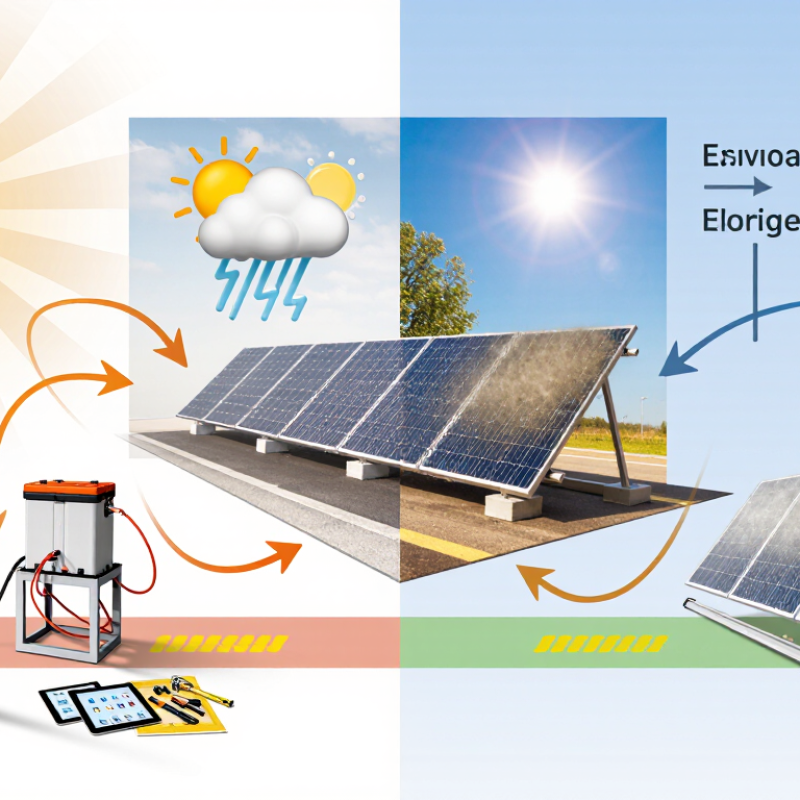
Accurate sizing starts with clear lighting requirements. Identify the road width, pedestrian activity, mounting height, and required brightness. A quiet residential lane needs different illumination from a busy intersection. Record operating hours, dimming periods, and acceptable lighting uniformity. Measure the distance between poles, too. Poor spacing can create dark patches, even when the lamp appears powerful.
Site conditions strongly affect solar performance. Check the panel’s daily sun exposure throughout the year, not only on a clear afternoon. Nearby trees, buildings, and utility structures may create seasonal shadows. Note latitude, cloudy-day frequency, dust, snow, wind, and the lowest expected temperature. Battery capacity should reflect these conditions and the required backup period. A drawing alone can mislead. Walk the site after sunset. Field observations often reveal glare, shadows, or unexpected traffic patterns.
Tips: Photograph shadows at different times. Record lux levels at ground height and near crossings. Allow extra energy for cloudy periods, but avoid excessive oversizing. It increases cost and may not solve poor placement. Recheck assumptions with local weather data. I would also leave a modest design margin, because real sites rarely behave perfectly. Inspect drainage and maintenance access before finalizing the pole location. A technically correct calculation can still fail when panels stay dirty or batteries become difficult to service.
How to Size Solar Panels and Batteries for Street Lights?
Calculate Daily Energy Demand for the Street Light
Daily energy demand is the foundation of a reliable street-lighting system. Measure the lamp’s actual power, not only its label rating. A 40-watt lamp operating for 12 hours uses 480 watt-hours per night. The calculation is simple: power in watts multiplied by operating hours.
Include the controller, wiring, and battery-charging losses. A practical design often adds 15% to 25% for these losses. In this example, the adjusted demand may reach 552 to 600 watt-hours daily. Dimming schedules can reduce consumption, but they must match road safety needs and local lighting requirements. Seasonal operation also matters. Winter nights are longer. Cloudy periods can be harsh. A fixed 12-hour estimate may be too optimistic.
Tips: Record real operating data for several nights when possible. Check whether the light runs at full power or changes brightness. Keep separate figures for summer and winter. Also, avoid using average weather data alone. It may hide several difficult days in a row. A common field mistake is sizing from the lamp rating only. I have seen small losses become significant across many lights. The estimate will never be perfect, so document every assumption and review it after installation.
Sunlight availability controls the solar panel size more than the lamp rating alone. Start with local peak sun hours, using monthly data from the World Bank’s Global Solar Atlas or NASA POWER. Design for the weakest solar month, not the annual average. A 40-watt lamp running 12 hours needs about 480 watt-hours daily. With 3.2 peak sun hours and 25% total system losses, the calculation requires roughly a 200-watt panel.
Use a measured solar resource when possible. Nearby shading, dust, panel angle, and winter cloud cover can reduce actual output. NREL’s PVWatts documentation uses 14% default system losses for standard photovoltaic projects, but battery-based street lights often need a larger allowance. A 20% to 30% design loss is more realistic for wiring, charging, conversion, and controller losses. Small details matter.
Field checks can prevent expensive oversizing. Compare simulated sunlight with rooftop or site measurements for several months. The first estimate is rarely perfect. For example, a coastal road may receive strong yearly sunlight but weak winter production. A cautious designer may increase panel capacity by 10% to 20%, then review battery charging records after installation. Global Solar Atlas data is valuable, but it is still a model, not a promise. Data sources: World Bank Global Solar Atlas, NASA POWER, and NREL PVWatts documentation.
The chart estimates the required solar-panel capacity at different annual-average peak-sun-hour levels. It assumes a 100 W LED street light operating for 12 hours per night, 1.2 kWh of daily energy demand, and 75% overall system efficiency for temperature, wiring, battery, and conversion losses. Lower sunlight availability requires a larger panel.
Calculation: panel size = daily energy demand ÷ (peak sun hours × system efficiency). A battery should also be sized separately according to the desired autonomy, local weather, and allowable depth of discharge.
Battery sizing begins with the lamp’s real nighttime energy use. Multiply its wattage by operating hours, then include controller, wiring, and conversion losses. A 30-watt light running for 12 hours consumes 360 watt-hours nightly. With 15% system losses, the battery must supply about 424 watt-hours.
Allow enough reserve for cloudy weather and seasonal variation. Many installations use two or three nights of autonomy, depending on local sunlight and road safety needs. For two nights, the example requires approximately 848 usable watt-hours. If the battery should not discharge below 80%, divide this figure by 0.8. Add another 15–25% for aging and cold temperatures. The result is roughly 1,200 watt-hours of rated capacity.
Weather changes everything. In field checks, battery capacity often looks adequate until several dull days arrive. A voltage reading alone can also mislead; measure overnight energy, morning voltage, and charging performance. Measure, do not guess. Lithium-based batteries usually tolerate deeper cycling, while other chemistries may need a larger reserve. Confirm the battery’s rated capacity at the expected temperature, not only under laboratory conditions. The solar panel must then replace the previous night’s energy and recover the reserve during available daylight. A design may work beautifully in June and struggle in December. That is not failure, but it deserves correction before installation.
| Street-Light Application | LED Load (W) |
Operating Time (h/night) |
Daily Energy Use (Wh/day) |
Backup Requirement (nights) |
Battery Voltage (V) |
Recommended Battery (Wh) |
Approx. Battery Capacity (Ah) |
Recommended Solar Panel (W) |
|---|---|---|---|---|---|---|---|---|
| Pedestrian pathway | 20 | 12 | 240 | 2 | 12 | 670 | 56 | 100 |
| Residential road | 30 | 12 | 360 | 2 | 12 | 1,000 | 84 | 150 |
| Collector road | 50 | 12 | 600 | 3 | 24 | 2,500 | 105 | 250 |
| Main-road lighting | 80 | 12 | 960 | 3 | 24 | 4,000 | 167 | 400 |
| Intersection or high-traffic area | 120 | 12 | 1,440 | 4 | 24 | 8,000 | 334 | 600 |
Sizing solar panels and batteries for street lights requires measured performance, not only a lighting load estimate. Begin with the lamp’s actual wattage, operating hours, dimming schedule, and local solar irradiation. NREL’s PV Degradation Rates report found a median module degradation rate of about 0.5% per year. Add this loss to the design margin. Battery capacity should cover the required autonomy after accounting for temperature, depth of discharge, wiring losses, and conversion efficiency.
A first design can still be wrong.
Compatibility matters at every connection. The charge controller must match the panel’s voltage range and the battery’s chemistry, charging profile, and maximum current. The controller’s low-temperature limits also deserve attention. IEC 61215 and IEC 61730 address module durability and safety, while IEC 60598-1 covers general luminaire safety requirements. NREL’s 2024 Annual Technology Baseline uses battery round-trip efficiency assumptions commonly near 85–90% for storage systems. That loss changes the required panel size.
Field checks should compare measured battery voltage, charging current, nighttime runtime, and illuminance at ground level. Dust, shade, and weak connections often explain poor results.
Tips: Record one week of real nighttime demand before final sizing. Test the system during cloudy weather. Leave practical headroom, but do not oversize blindly; excess capacity can increase cost and reduce charging effectiveness. Use compatible connectors, fuses, enclosure ratings, and thermal protection. Recheck assumptions after installation, because street conditions rarely match the spreadsheet.
Multiply actual lamp power by operating hours. A 40-watt lamp running 12 hours uses 480 watt-hours nightly.
Use measured power when possible. The label may ignore dimming, control changes, or real operating conditions. I once trusted the label too quickly.
Add about 15% to 25% for wiring, control, conversion, and charging losses. The 480 watt-hour example may become 552 to 600 watt-hours daily.
Yes, dimming can lower energy use during quiet hours. However, brightness must still meet road safety needs. Less power is not always better.
Use separate summer and winter estimates. Winter nights last longer, and cloudy periods may continue for several days. A fixed 12-hour assumption can be too optimistic.
Divide daily energy demand by peak sun hours. Then allow for total system losses. For 480 watt-hours, 3.2 peak sun hours, and 25% losses, about 200 watts may be required.
Annual sunlight averages can hide difficult winter conditions. A coastal location may have strong yearly sunlight but weak winter production. Average figures can mislead.
Nearby shade, dust, poor panel angles, clouds, and wiring losses can reduce production. Measure the site when possible. Models are useful, but not promises.
A cautious design may add 10% to 20% panel capacity. Review charging records after installation. The first estimate is rarely perfect.
Sizing a reliable solar street light system begins with understanding the lighting requirements and site conditions. Identify the required brightness, operating hours, mounting location, local weather, available sunlight, shading, and seasonal changes. Then calculate the light’s daily energy demand by combining its power consumption with the number of hours it operates, while also allowing for controller, wiring, and conversion losses.
To determine how to calculate solar panel and battery size for street lights, estimate the available peak sunlight hours and select a panel capable of producing the required daily energy with a safety margin. The battery should store enough energy for one full night and provide additional backup for cloudy or rainy periods. Finally, verify that the panel, battery, controller, light, and protective components are electrically compatible. Reviewing expected performance under seasonal conditions helps create a balanced system that delivers dependable nighttime illumination and supports long-term operation.

Lukas Lighting