A lithium solar battery may serve a home for many years, but its lifespan is not a fixed number. The question “what is the average lifespan of a lithium solar battery” needs context. Many residential systems are designed to last around 10 to 15 years, though actual performance depends on the battery model, usage, and installation conditions. A warranty offers a useful reference, not a promise that every battery will behave identically.
Daily habits matter. A battery cycled deeply each evening may age differently from one used only during occasional outages. Temperature matters, too. A unit in a shaded, ventilated garage faces different conditions from one exposed to summer heat. Small details count. Charging limits, inverter settings, and system maintenance can also influence how much usable capacity remains over time.
In 2026, lithium iron phosphate batteries are common in home storage, while other lithium-ion chemistries remain available. Their specifications and expected cycle counts vary, so compare the manufacturer’s datasheet with your household’s needs. A cycle rating alone can be misleading. It does not describe every climate or charging pattern.
Watch the battery’s reported capacity, not just its age. A gradual decline is normal. Still, estimates can be imperfect, and real-world results may differ from a neat chart. Reviewing warranty terms and installation guidance gives a more dependable starting point than relying on a single lifespan figure.
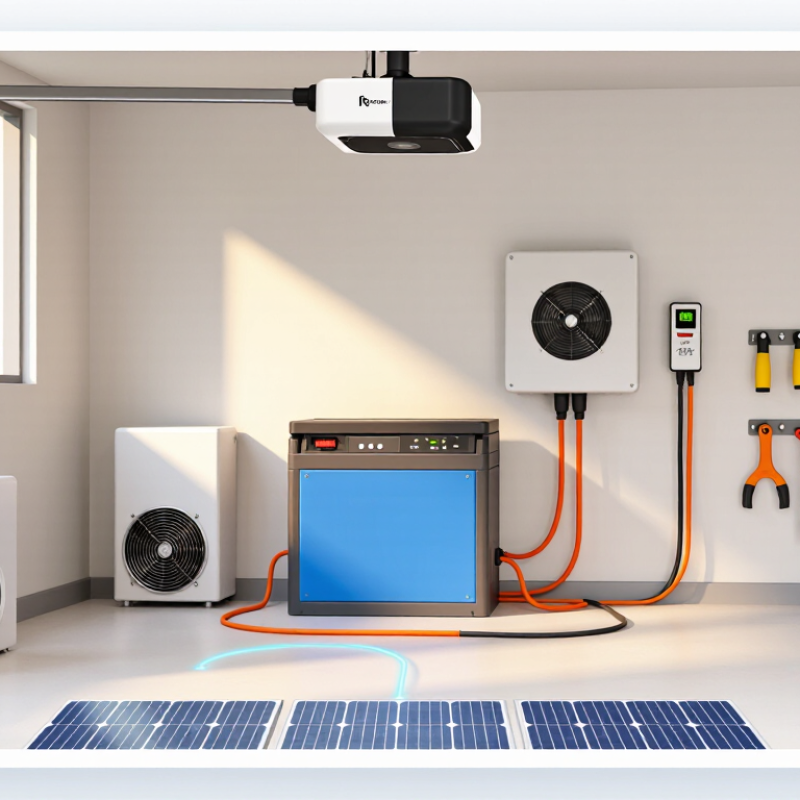
How long a lithium solar battery lasts depends on more than its chemistry. Cell quality and battery design matter, but everyday operating conditions shape how quickly capacity fades. A battery that cycles deeply every night may wear faster than one with a reserve. Small choices add up.
Heat is a major factor. A battery installed in a hot, poorly ventilated garage can age faster than one kept within its recommended temperature range. Frequent full discharges, unsuitable charging settings, and long periods at a full charge can also increase wear. Cold conditions may temporarily reduce available power. Check the manual; temperature limits vary by system. In real installations, usage patterns are not always neat or predictable.
Tips: Keep vents clear and check operating temperatures during hot weather. Use the battery’s recommended charge settings, and avoid draining it completely when possible. Review its monitoring data monthly. A sudden change in capacity deserves attention, though one unusual reading may not tell the whole story.
A lithium solar battery’s life is described in cycles, years, and remaining capacity. These measures answer different questions. A cycle usually means using energy equal to the battery’s full rated capacity, then recharging it. It does not always mean one complete charge from empty to full. Two half-discharges can add up to roughly one equivalent full cycle.
Cycle ratings depend on test conditions, including discharge depth, temperature, and charging rate. A battery used gently in a cool, ventilated space may age differently from one repeatedly drained deeply in a hot shed. Real use is messier than a laboratory test. Partial cycles also make the count harder to interpret.
Years measure calendar aging, even when a battery is rarely used. Capacity describes how much energy it can still store compared with when it was new. For example, a battery rated at 10 kilowatt-hours with 80 percent remaining capacity may hold about 8 kilowatt-hours under comparable conditions. That distinction matters. Many specifications use a stated capacity threshold, often around 70 or 80 percent, but the exact figure varies. Check the test conditions and warranty language, and compare them with your own daily energy use. A cycle number alone cannot predict a precise replacement date.
In 2026, a lithium solar battery in a typical home often lasts about 10 to 15 years. Many lithium iron phosphate batteries are rated for roughly 3,000 to 6,000 full-equivalent cycles, but chemistry and testing conditions affect that figure. A cycle means discharging energy equal to the battery’s rated capacity; it does not always mean one day of use. Check the product specifications for cycle count and expected remaining capacity, commonly stated as 70% or 80%. The cycle number alone can mislead.
Daily conditions matter. High temperatures, frequent deep discharges, and poor ventilation can shorten service life. A battery installed in a hot garage may age faster than one kept in a cooler, shaded space. In practice, it helps to review the system’s monitoring data and follow the manufacturer’s recommended charge settings. Calendar age also matters, even when the battery is used lightly. A tidy estimate can still be wrong for a particular home, since weather, household demand, and installation quality vary.
How Long Does a Lithium Solar Battery Last in 2026?
Factors That Shorten or Extend Battery Service Life
A lithium solar battery’s service life depends on more than its age. Heat, charging habits, and daily energy use all affect how quickly its usable capacity declines. Heat matters. A battery installed in a sun-baked shed may run warmer than one kept in a shaded, ventilated space. Repeatedly charging to full and draining deeply can also add stress. Follow the battery’s stated operating limits, and avoid placing it where afternoon sun heats the casing.
NREL’s 2024 Annual Technology Baseline uses a 15-year lifetime for modeled utility-scale lithium-ion storage. That is a planning assumption, not a guarantee for a home battery. Real systems differ in chemistry, controls, installation, and workload. A battery that cycles heavily every day may age differently from one used mainly during evening peaks. Its management system can help keep charging within safe limits, but it cannot erase heat or wear. I would not treat one lifespan figure as a promise. Keep the unit cool, leave airflow around it, and review its capacity periodically; a gradual drop can be easy to miss until a cloudy week arrives. (NREL, 2024 Annual Technology Baseline)
| Factor | What Can Extend Service Life | What Can Shorten Service Life | Practical Guidance |
|---|---|---|---|
| Battery chemistry | Lithium iron phosphate (LFP) cells commonly have longer cycle-life ratings than nickel manganese cobalt (NMC) cells. | Choosing a battery whose chemistry or design is poorly matched to frequent cycling or the installation environment. | As a broad guide, some LFP products are rated for roughly 3,000–6,000 cycles and some NMC products for roughly 1,000–3,000 cycles to a stated capacity threshold. Actual ratings vary by product and test conditions. |
| Typical service life | Moderate temperatures, compatible controls, and use within the specified operating limits can support a longer calendar life. | High heat, heavy cycling, or operation outside the battery’s specified limits can cause capacity to fade sooner. | Many home solar lithium batteries are designed for about 10–15 years of service, but actual life depends on the product, usage, environment, and maintenance. A cycle rating is not a guaranteed number of years. |
| Depth of discharge (DoD) | Using only part of the battery’s capacity for each cycle generally reduces stress compared with routinely using nearly all available capacity. | Repeated deep discharges can contribute to faster degradation, particularly when combined with high temperatures or high charge rates. | Avoid routinely reaching the battery’s low-voltage cutoff. Follow the manufacturer’s recommended usable-capacity range; cycle-life figures are meaningful only when their test DoD is known. |
| Operating temperature | A cool, stable, well-ventilated installation within the specified temperature range helps limit heat-related aging. | Prolonged high temperatures accelerate capacity loss. Charging below 0°C (32°F) can damage many lithium-ion cells unless the battery is specifically designed to prevent it. | Install the battery away from direct sun and heat sources. Check its permitted charging and discharging temperatures; limits vary by model and chemistry. |
| Charge and discharge rate | Keeping charge and discharge currents within the battery’s recommended limits can reduce electrical and thermal stress. | Frequent high-power charging or discharging, especially when the battery is hot or nearly full, can increase degradation. | Configure the inverter and charge controller to respect the battery’s specified current and power limits. |
| Time spent at very high or low charge | For extended storage, use the charge level and storage procedure recommended by the manufacturer, and check the battery periodically if required. | Leaving a battery at full charge for long periods, or allowing it to remain deeply discharged, may accelerate aging or risk a protective shutdown. | Use the system’s recommended reserve and storage settings. Do not assume one storage charge level is appropriate for every lithium battery. |
| Battery management system (BMS) | A properly functioning BMS can monitor cell voltage and temperature and help prevent operation outside safe limits. | Incompatible settings, faulty sensors, or bypassed protections can expose cells to unsafe conditions. | Use compatible equipment and approved settings. Investigate repeated alarms or unexpected shutdowns rather than disabling protective functions. |
| System sizing and daily cycling | Adequate capacity can meet household needs without requiring unusually deep daily discharges. | An undersized battery may be cycled deeply and frequently, increasing cumulative wear. | Size storage around expected energy use, backup needs, and the battery’s usable capacity—not just its headline capacity. |
| Capacity fade and replacement point | Tracking usable capacity over time helps identify gradual, expected aging and plan for replacement. | A battery may no longer meet backup or daily-energy needs before it stops functioning entirely. | Compare the battery’s measured usable capacity with your needs and warranty terms. Capacity thresholds and warranty coverage vary by product. |
Note: Cycle-life and calendar-life figures are estimates, not guarantees. Check the specific battery documentation for test conditions, operating limits, and warranty terms.
A lithium solar battery rarely fails overnight. Aging usually appears as a gradual loss of usable capacity. A system that once powered a refrigerator and lights through the night may now run short before dawn. Track how much energy it stores and delivers over several weeks, rather than judging it after one cloudy day.
Watch for repeated changes. The battery may reach full charge unusually quickly, drain faster under the same household load, or trigger low-voltage warnings more often. Some systems show rising internal resistance or reduced capacity in their monitoring data. Check connections and settings too; a loose cable or changed charging profile can imitate battery aging. One odd reading proves little.
Time for a closer assessment. Compare measured capacity with the manufacturer’s specifications and warranty terms; replacement thresholds differ by model and operating conditions. Persistent capacity loss, frequent shutdowns, or an inability to support essential loads may justify professional testing. Do not ignore swelling, a damaged case, unusual heat, or a burning smell. Stop using the battery and contact a qualified technician. It is easy to blame age too soon, but waiting too long can leave a home without reliable backup.
One cycle represents energy use equal to the battery’s rated capacity, followed by recharging. Two half-discharges can count as roughly one full-equivalent cycle.
Many last about 10 to 15 years. Actual life varies with chemistry, temperature, installation, and daily use. It varies.
Some are rated for roughly 3,000 to 6,000 full-equivalent cycles. Test conditions matter, so the number is not a precise replacement date.
It shows how much energy the battery can store compared with when it was new. A 10-kilowatt-hour battery at 80% capacity may hold about 8 kilowatt-hours.
Yes. Calendar aging continues over time, even if the battery cycles only occasionally. Low use does not stop aging.
High temperatures, repeated deep discharges, and poor ventilation can speed up capacity loss. A hot shed in afternoon sun is a poor spot.
Not by itself. Weather, household demand, and charging habits also matter. That estimate helps, but it can still miss a home’s unusual seasons.
Review system monitoring data and compare usable capacity periodically. Follow the stated charging limits and keep airflow around the unit. A gradual drop is easy to miss.
A lithium solar battery’s lifespan depends on its chemistry, build quality, operating temperature, depth of discharge, charging habits, and how often it is used. To understand what is the average lifespan of a lithium solar battery, it helps to look beyond calendar years: manufacturers and users also assess service life through charge cycles and remaining capacity. A cycle represents the use and recharge of an amount of stored energy, while capacity indicates how much energy the battery can still hold compared with when it was new. In 2026, many lithium solar batteries are designed to provide years of regular service, though actual life varies with system design and conditions.
Moderate temperatures, sensible charge and discharge limits, and routine system monitoring can help extend battery service life. Excessive heat, frequent deep discharges, long periods at extreme charge levels, or poor installation may accelerate aging. Gradually reduced storage and shorter backup times are common signs of capacity loss. Replacement may be appropriate when the battery can no longer meet household needs or its usable capacity falls below the level recommended for the system.
Lukas Lighting